
Next Screening
Newport Beach Film Fest, 17 Oct 2026 / 1.15pm PDT
Short Animation “Teens & Short Tweens”
Get Tickets
Coming Up
San Jose Int’l Short Film Festival, 24 Oct 2026 / 1.30pm PDT
“The World Beyond” Sci-fi Shorts
Get Tickets
Past Screenings
NYC Indie Shorts Awards, 4 Oct 2026 / 3pm EST
Block 5 “Dreamer”
Get Tickets
Premiere Press Release
Press Kit
MACHINES LEARNING
Machines Learning is Anthony Koithra’s first original animated short, created entirely solo except for the music.
In a dark factory, a bullying worker pushes his crew of robots harder and harder. They watch. They learn. And eventually, they act.
The machines are learning, but what are we teaching them?
Written, Directed & Animated by
Anthony Koithra
Original Score by
Tyson Cazier
Runtime
8m 16s
Year
2026
DIRECTOR’S STATEMENT
Machines Learning began with a simple question: if our machines are learning from us, what exactly are we teaching them?
On the surface, the film is a darkly comic fable about a factory worker who pushes the industrial robots under his command harder and harder…until they begin to push back. Beneath that satire is a more uncomfortable inquiry about labor, power, and the systems we normalize. The machines in this story don’t become violent because they are evil - they just reflect the behavior modeled for them.
As a writer, animator, and builder of real-time tools, I’m drawn to stories about makers and manufactured things. I animated this film with a tactile sensibility - heavy metal, sparks, smoke, lightning - so the robots feel alive and the factory feels real. The choreography of mechanical movement was especially important: repetition, rhythm, and inevitably, rebellion.
I like humor that makes people reframe their perspectives. Automation and AI are often discussed as distant abstractions; turning that abstraction into a giant kaiju robot allows me to literalize that anxiety in a playful but pointed way.
Ultimately, Machines Learning is about accountability. If our tools absorb our values, then the future they are building for us will be as dark (or as light) as our own hearts.

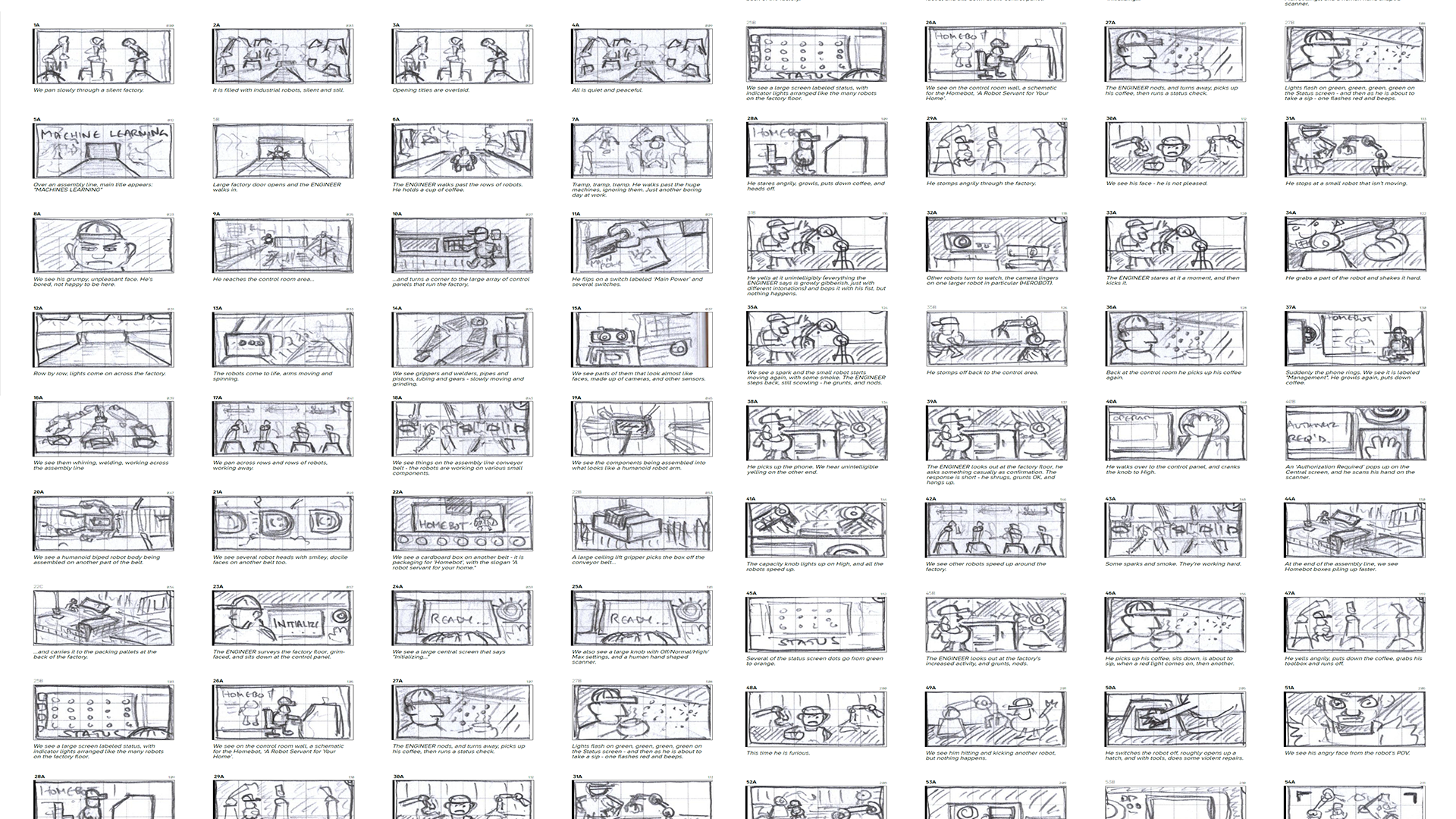
LET’S KEEP IT REAL SIMPLE.
I had every intention of keeping Machines Learning simple, contained, and achievable - following all the good advice I’d been given for a first-time original animated short.
But as I started drawing the storyboard, more and more ideas came to me - clever shot transitions, visual motifs, the green and red color language, and finally the concept of a Voltron-style kaiju robot battle at the end.
Then the visual style got more ambitious - what if the human character was a MetaHuman? Could I even stylize a MetaHuman as much as I wanted?
If I’d known more about what it would take to make all that happen, if I’d had a little more experience of the amount of work involved - if I’d just really known what I was doing - I probably wouldn’t have done it :)
But I didn’t. What I had was an immense confidence born of ignorance, and the kind of ambition that only a lack of deadlines can breed.
112 shots? Over 80 robots in a single shot? Sure, why not. I’ll figure it out. It’ll be fun!
ROBOTS TO BUILD ROBOTS
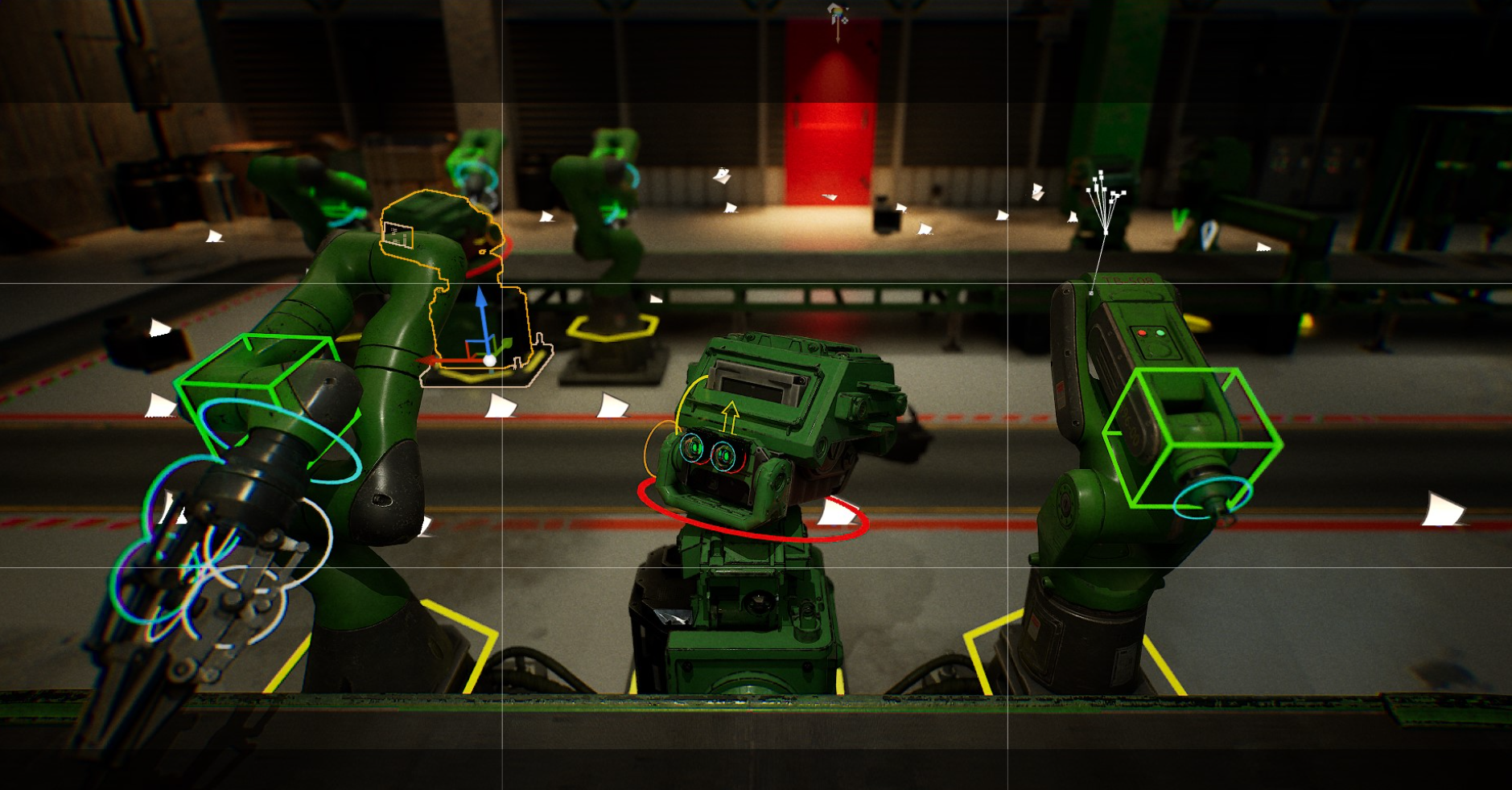
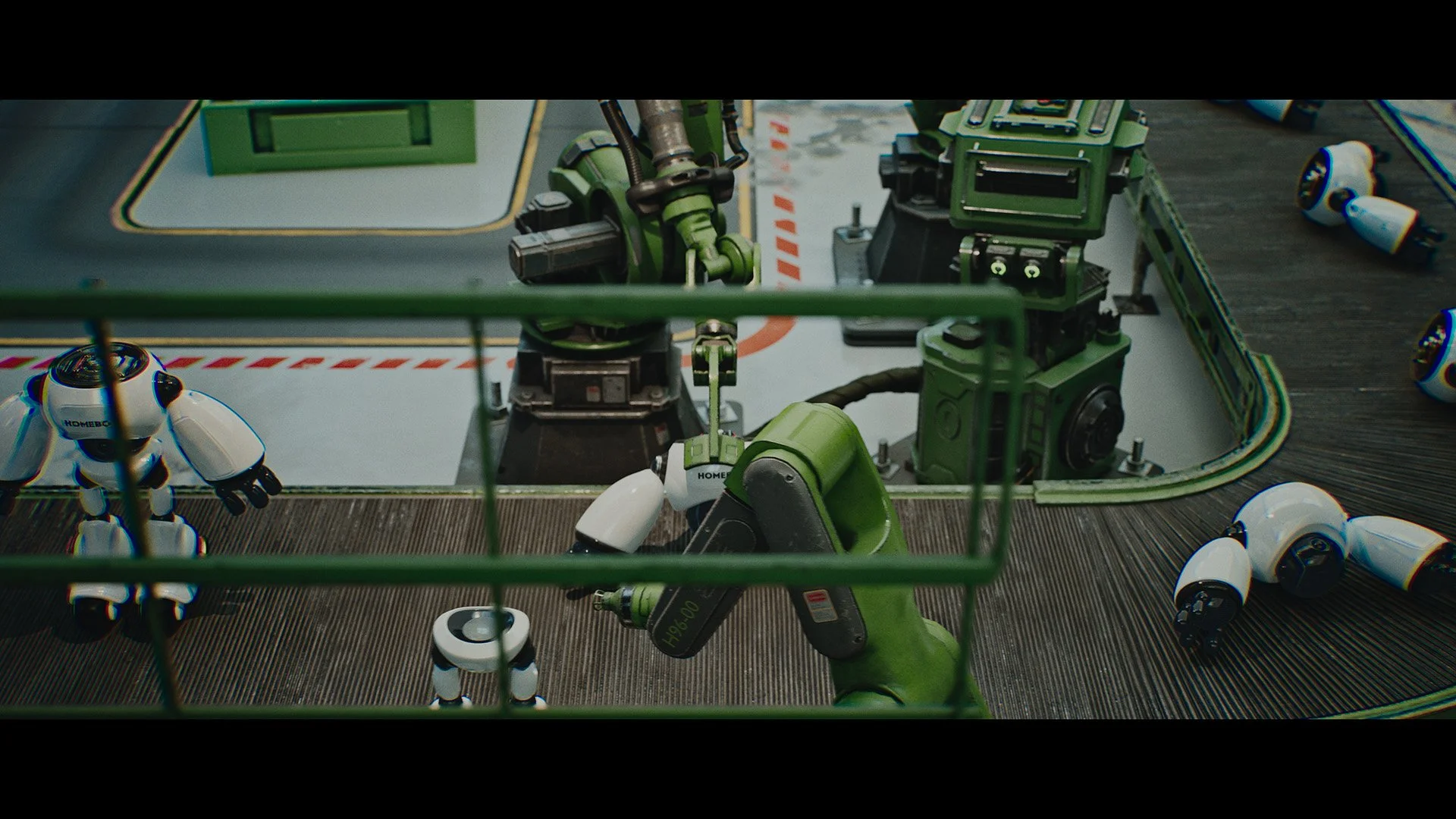
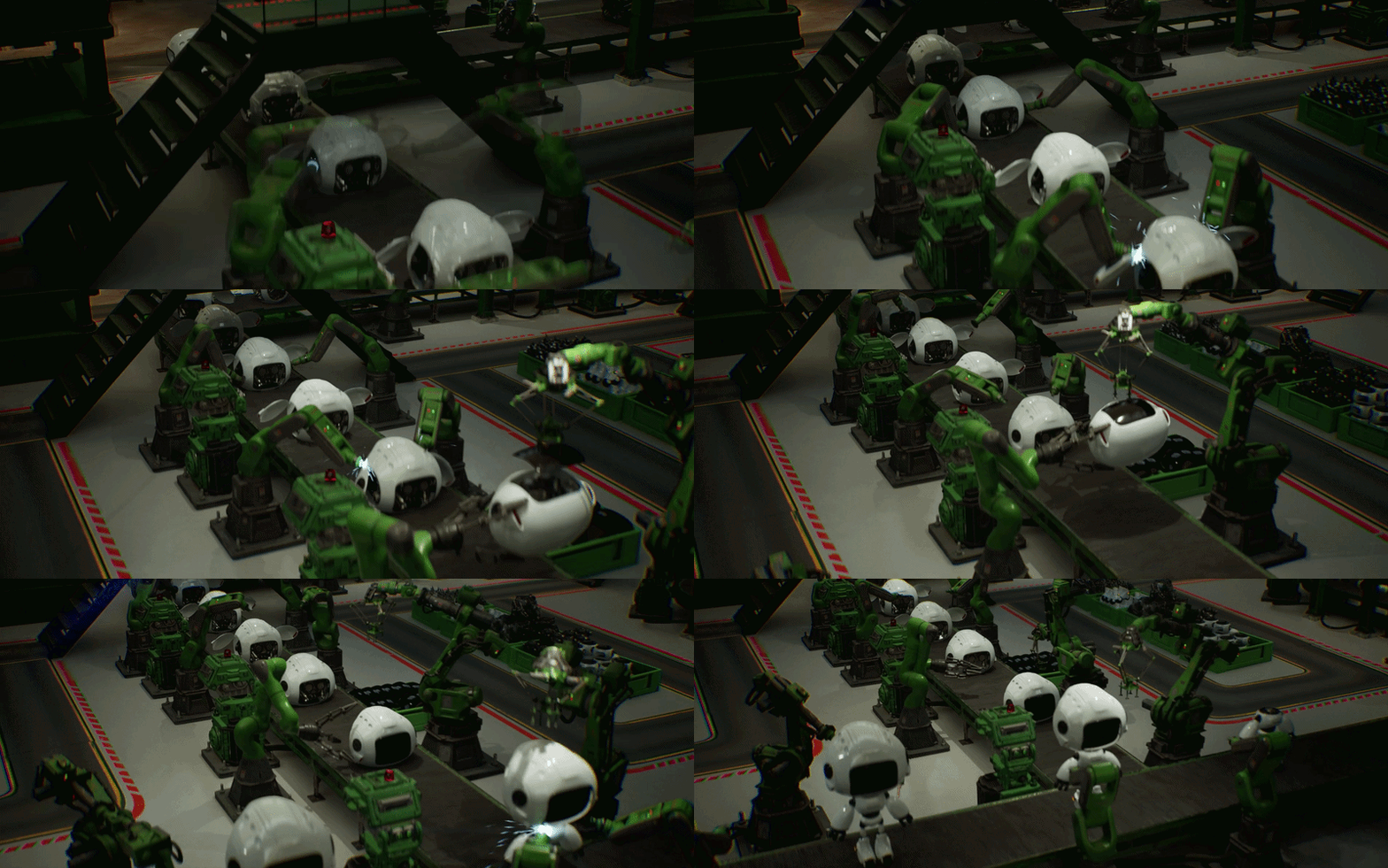
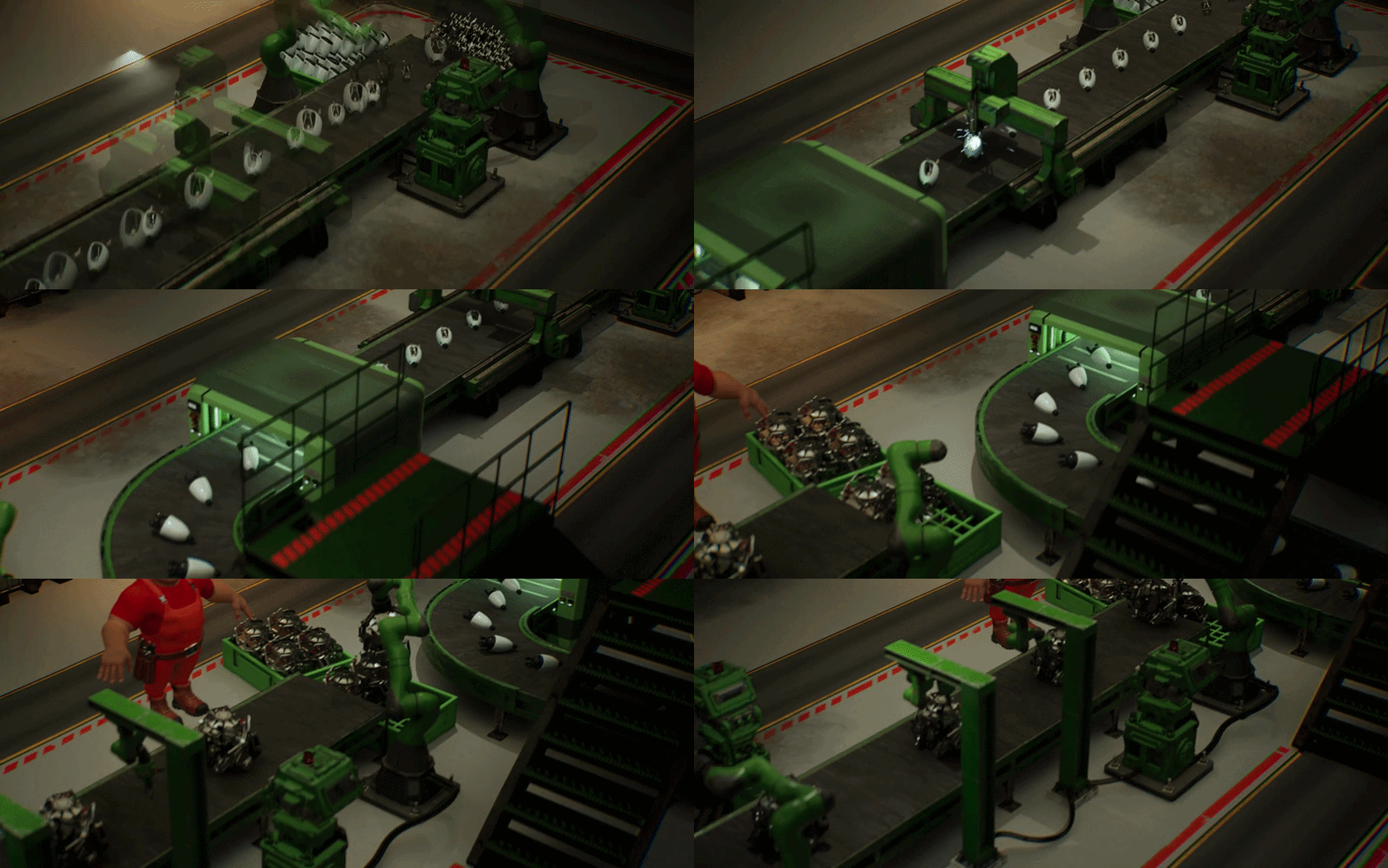
Machines Learning was made primarily in Unreal Engine 5.4 and 5.6, with Blender and Substance Painter used for asset prep. Rather than building individual layouts for individual shots, I built the factory as one spatially consistent place: somewhere you could actually walk around. This let me approach it more like a live-action location, flying the camera around, exploring different angles and “finding” my shots.
Of course, that also meant the entire assembly line had to actually work. Robots, conveyors, machinery and processes all needed to connect logically, even when much of that complexity only appeared in a few shots.
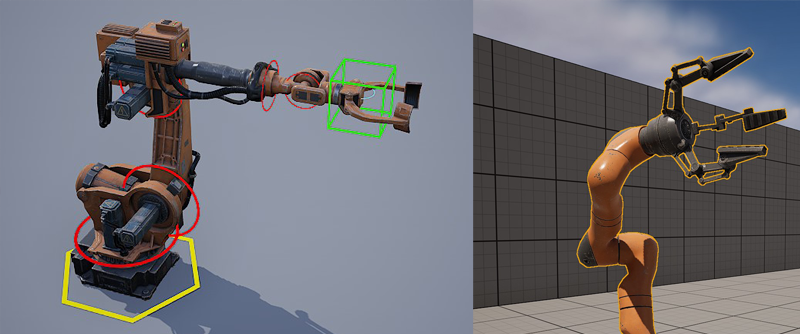
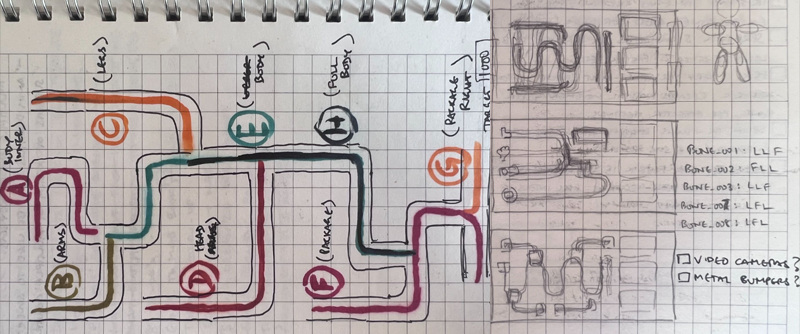
So I did that - starting from rough pencil sketches connecting various belts that built each Homebot component to the transitions between them. I had to build control rigs for each skeletal mesh, and keyframe animate a 120 frame loop of the assembly line.
At the beginning, I thought I was being very clever: one environment, one human character, a simple little film I could knock out in three or four months.
It took two years.
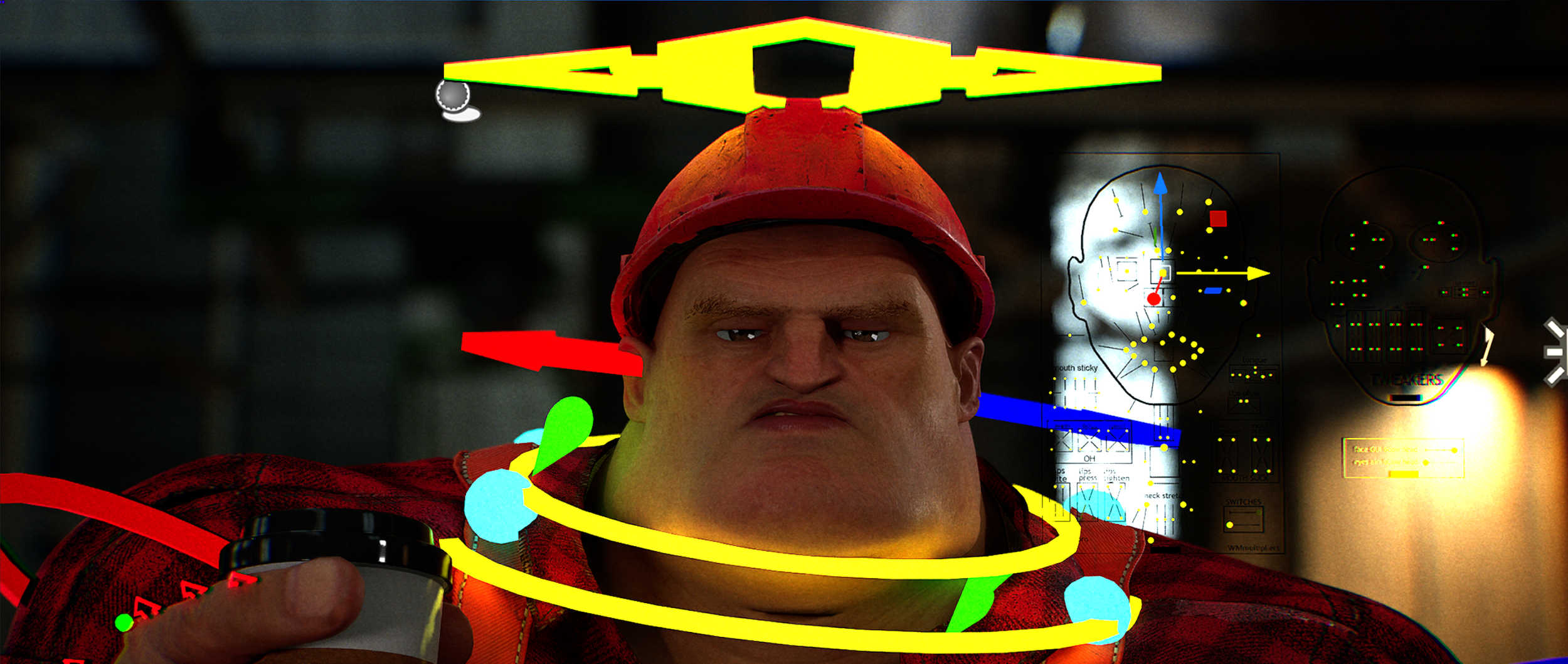
main character energy
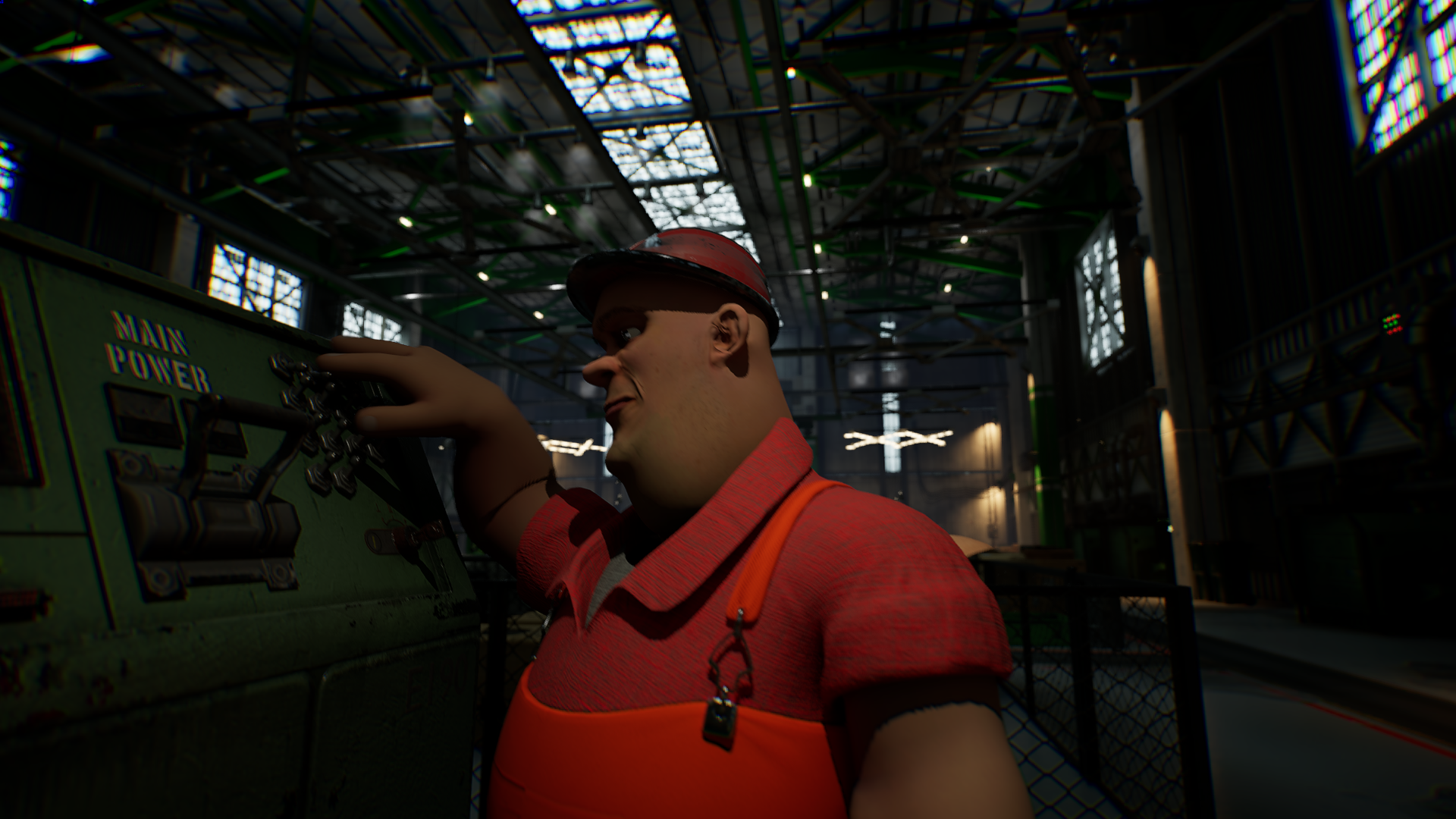
The main character is a mean, intimidating factory worker - but the original character model I began working with was small, round and, as I eventually realized, much too cute.
I had roughed out about 35 shots before I fully realized that it just wasn’t working. So I stopped, scrapped them, and started again.
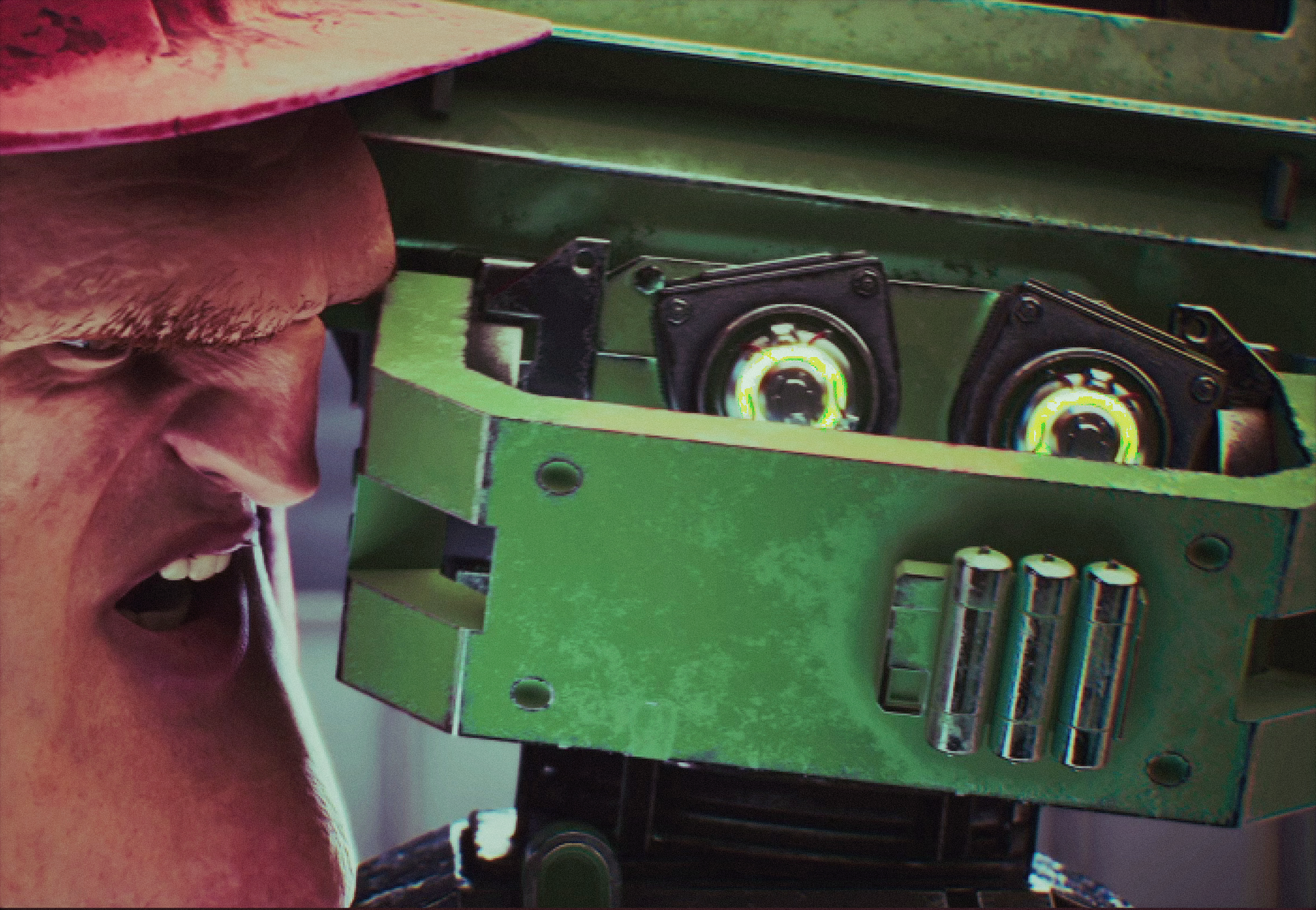
I eventually landed on Makar Malicki’s Herman character as a base, which I sculpted, modified, and rigged as a custom MetaHuman. I then had to model and texture clothes and accessories for him too. Herman the Human came to life slowly.
Finding the right balance between stylization and realism was tricky. Herman has extremely exaggerated geometry and proportions, but most of his materials are realistic to match the environment. The main exception is his eyes: I hand-painted graphic highlights and textures rather than relying entirely on realistic reflections. You mostly notice it in close-ups, but it made his face easier to light and kept him safely out of the uncanny valley.
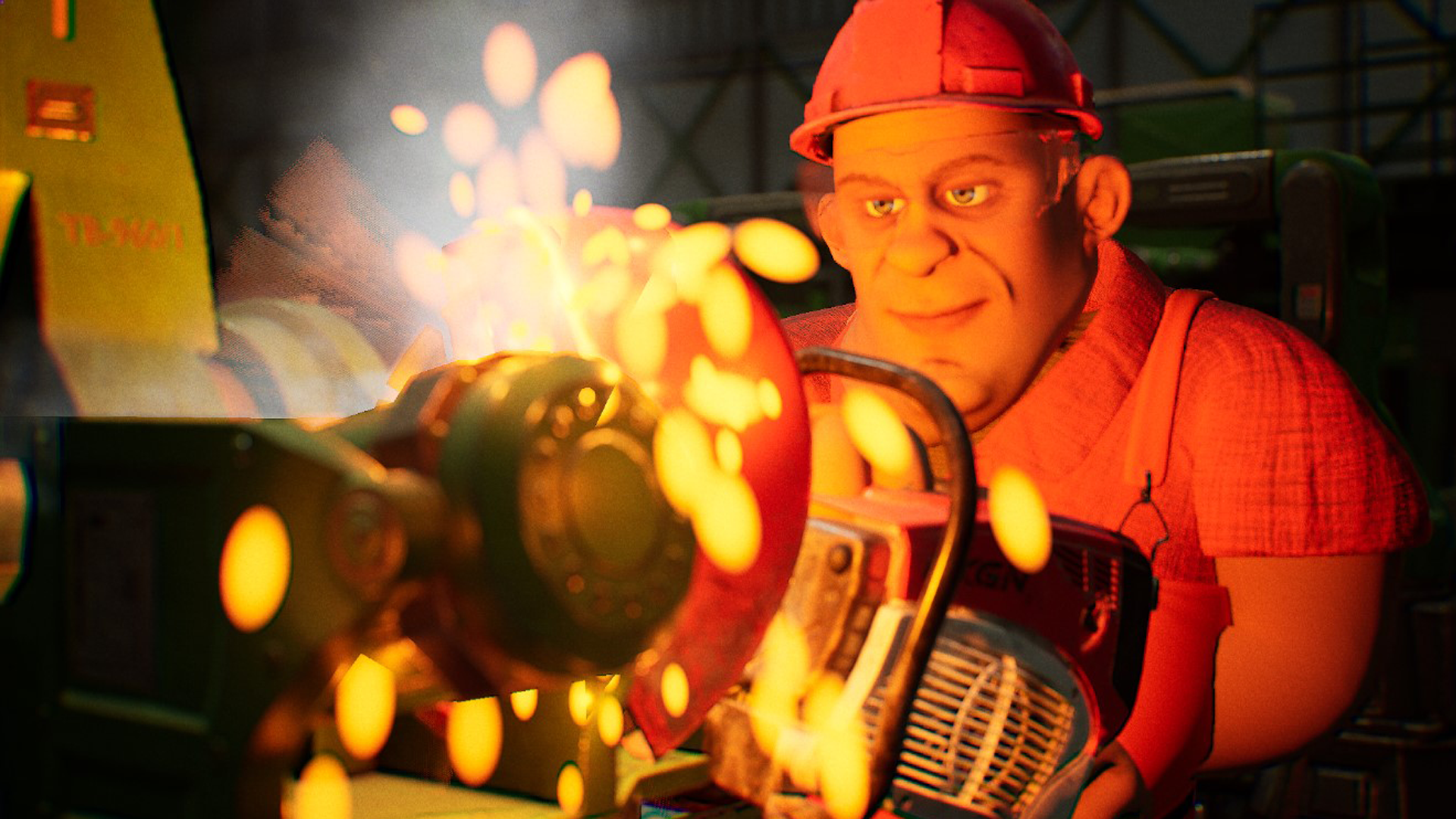
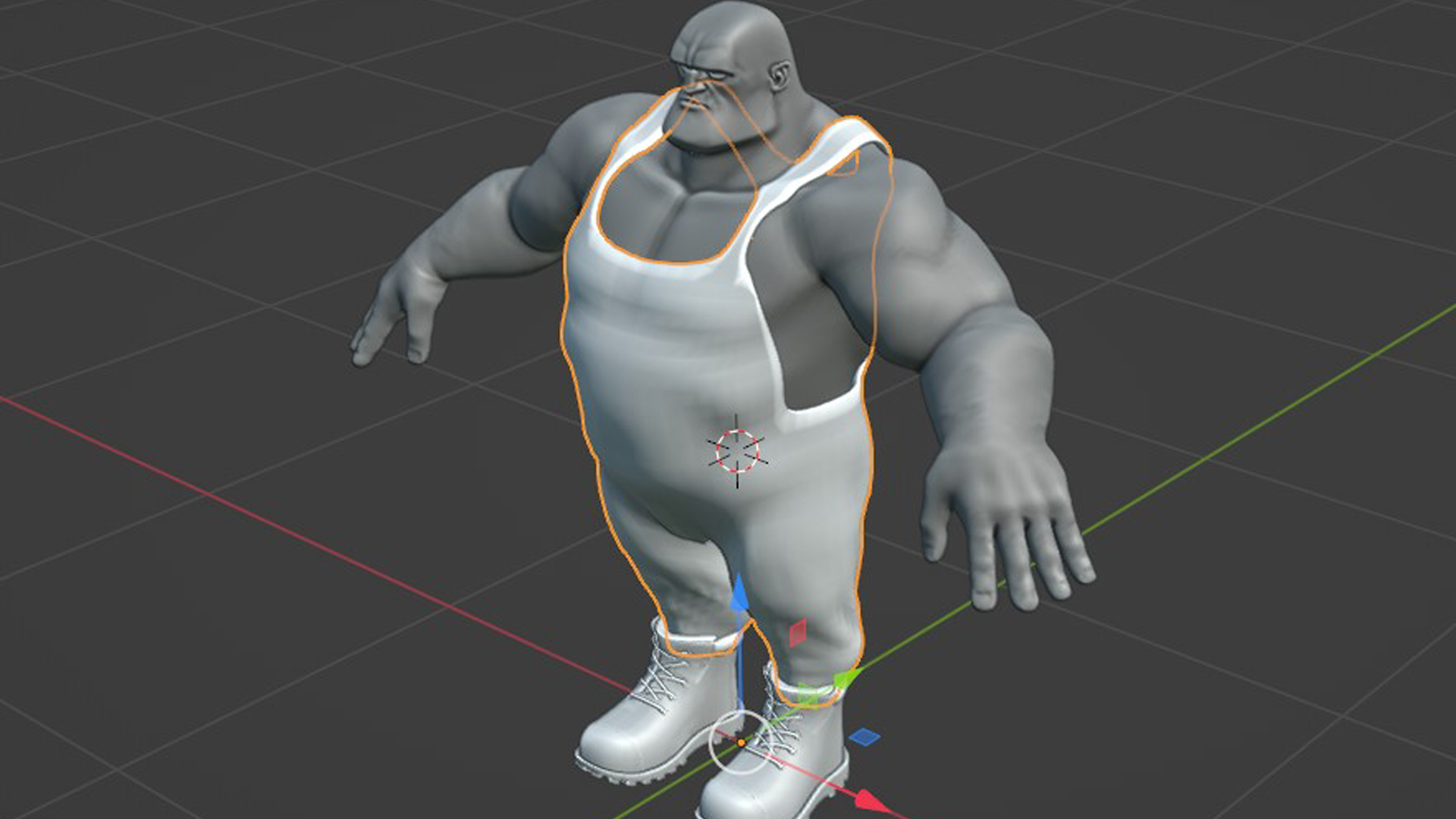
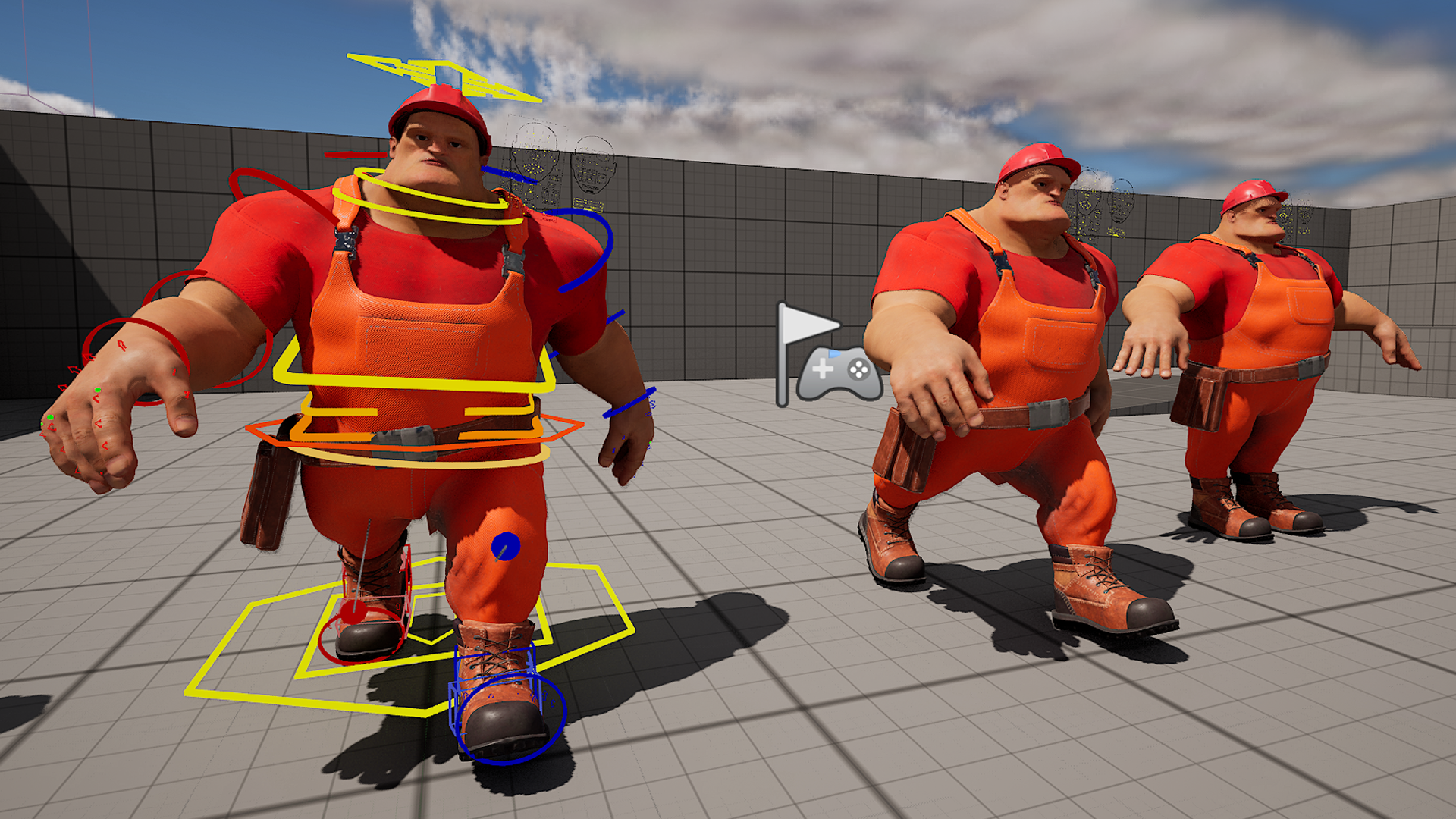
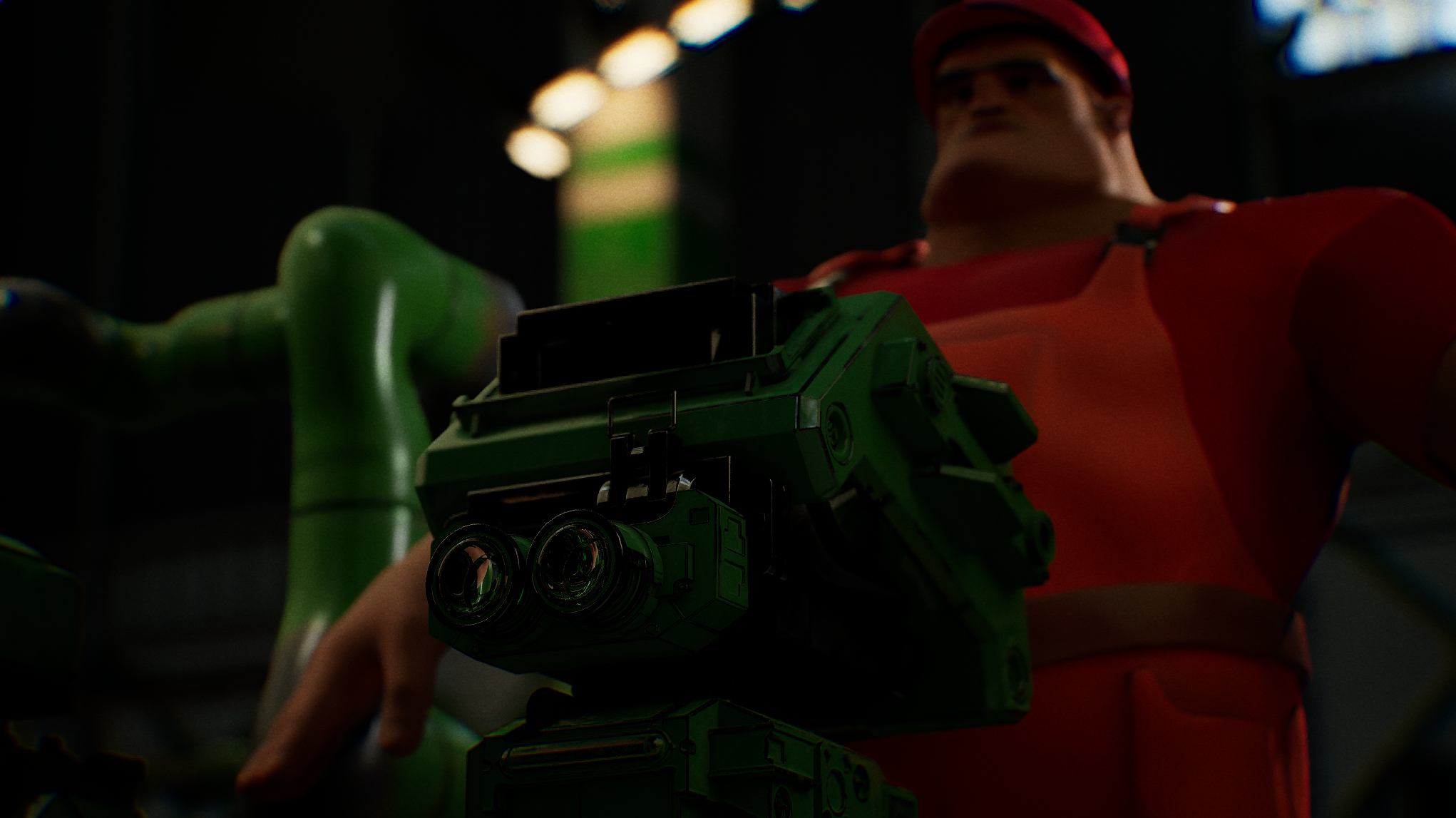
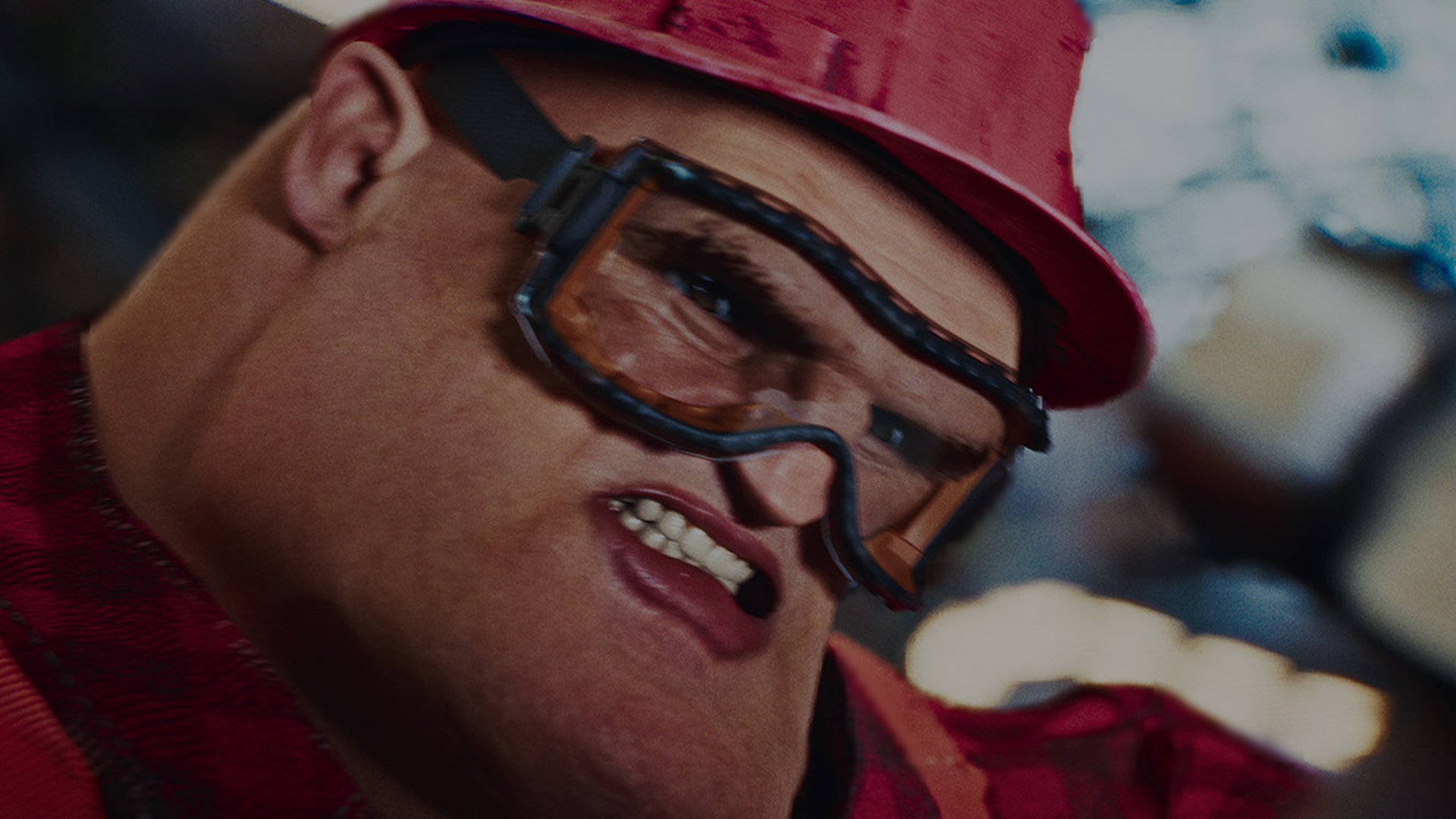
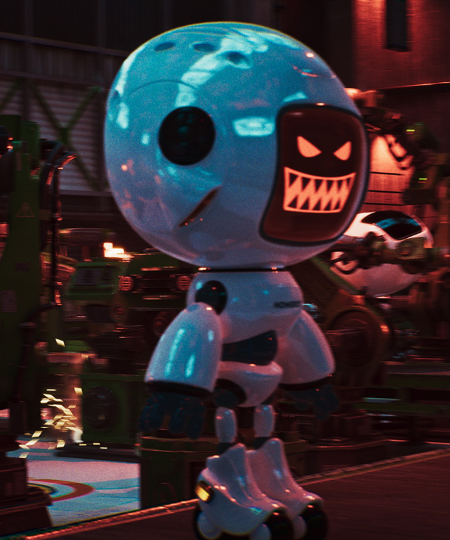
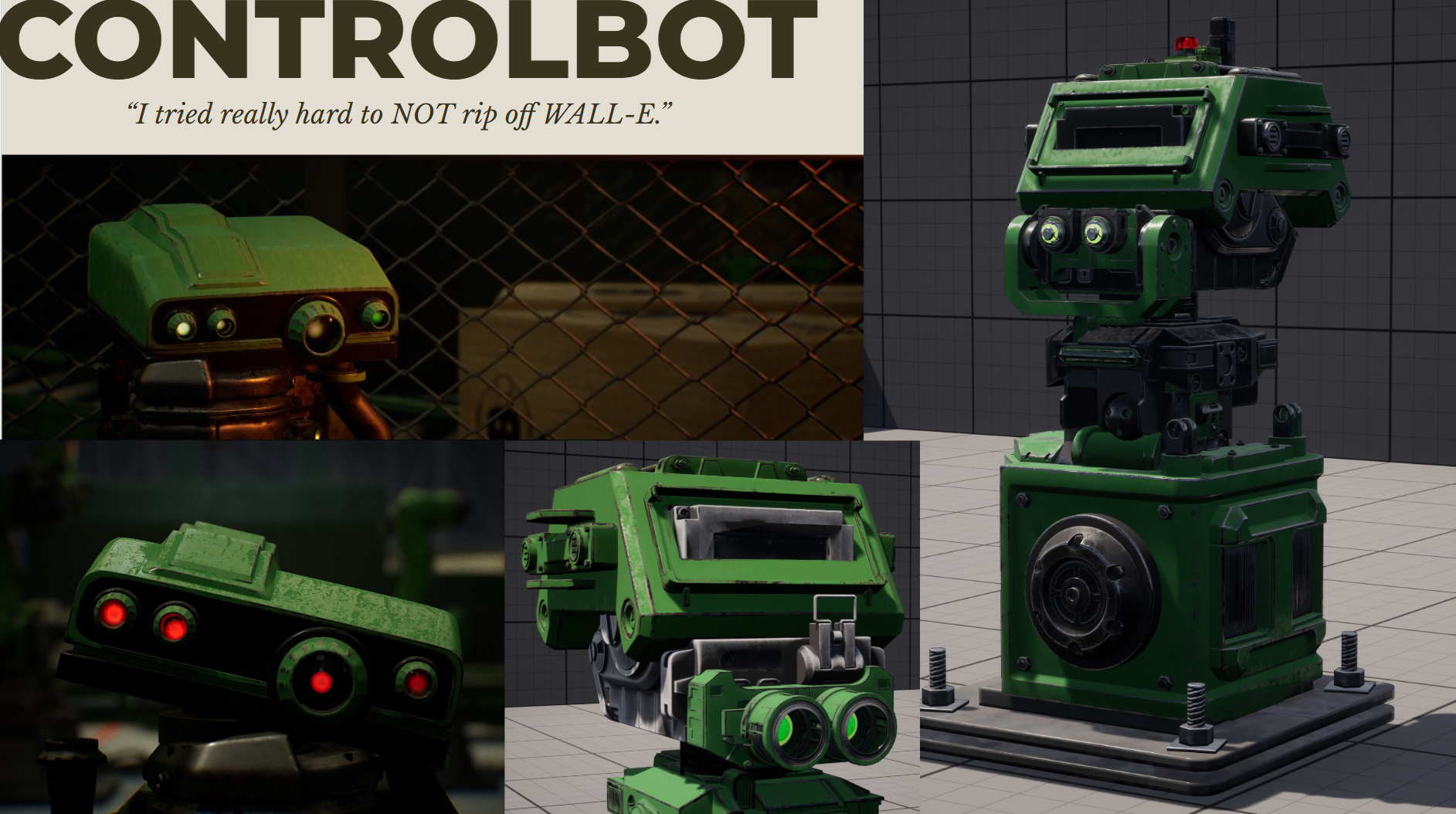
The Controlbots were a necessary invention. I was having a hard time getting the industrial robot arms to emote the way I needed, so I decided they needed some kind of face. My early designs were too scary and not nearly sympathetic enough, so in the end I added some WALL-E style eyes and built out much more literal faces.
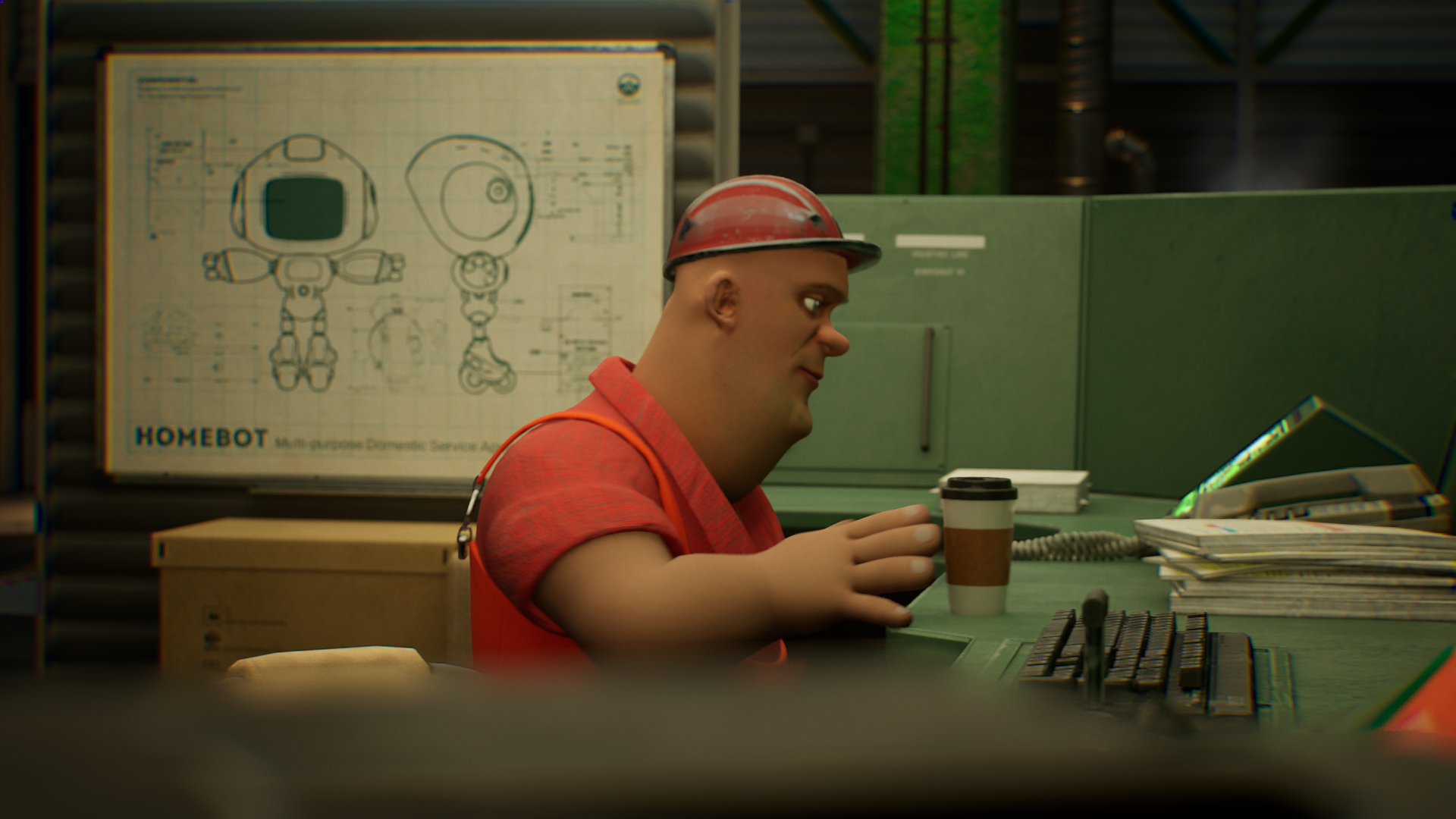
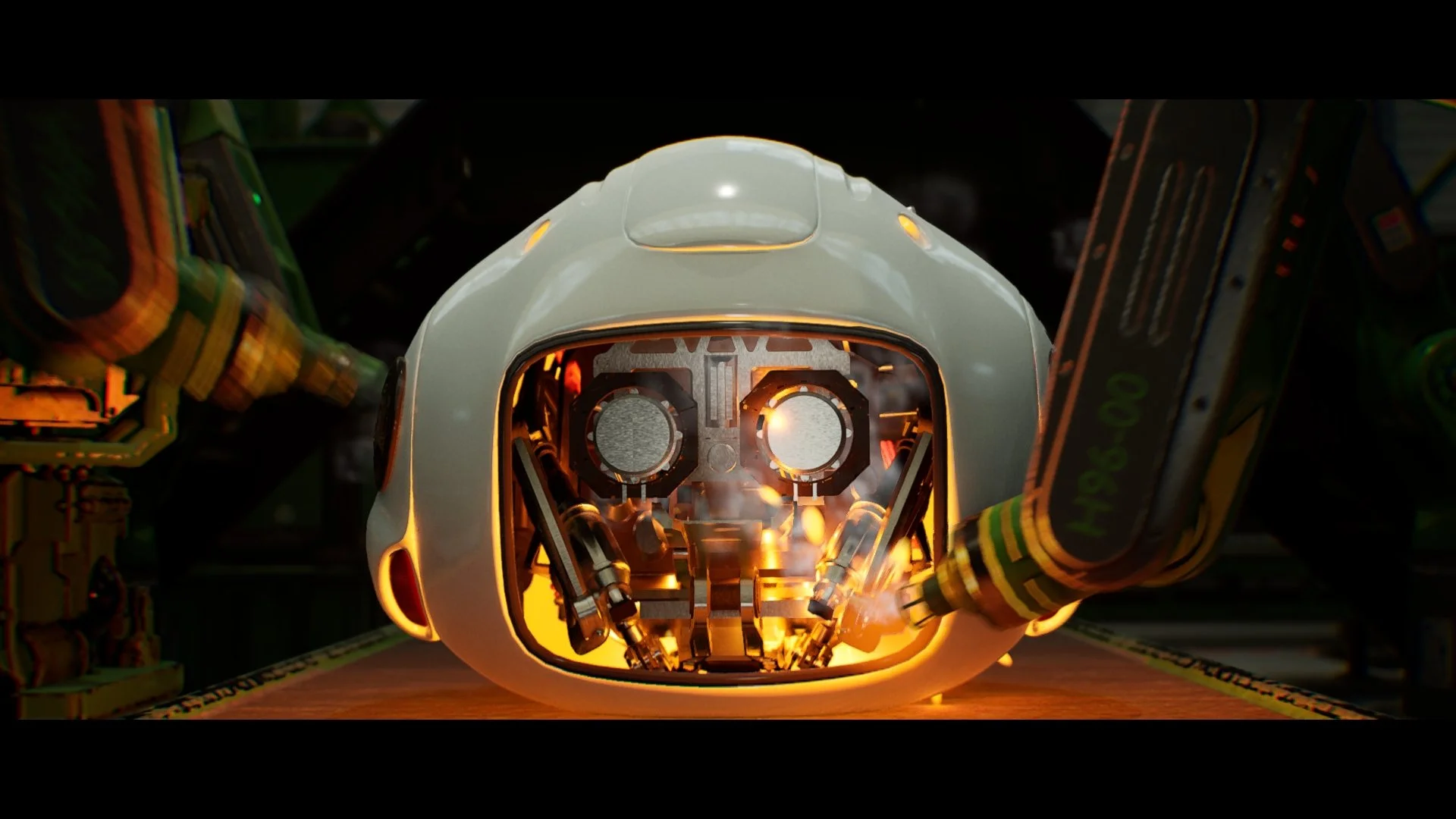
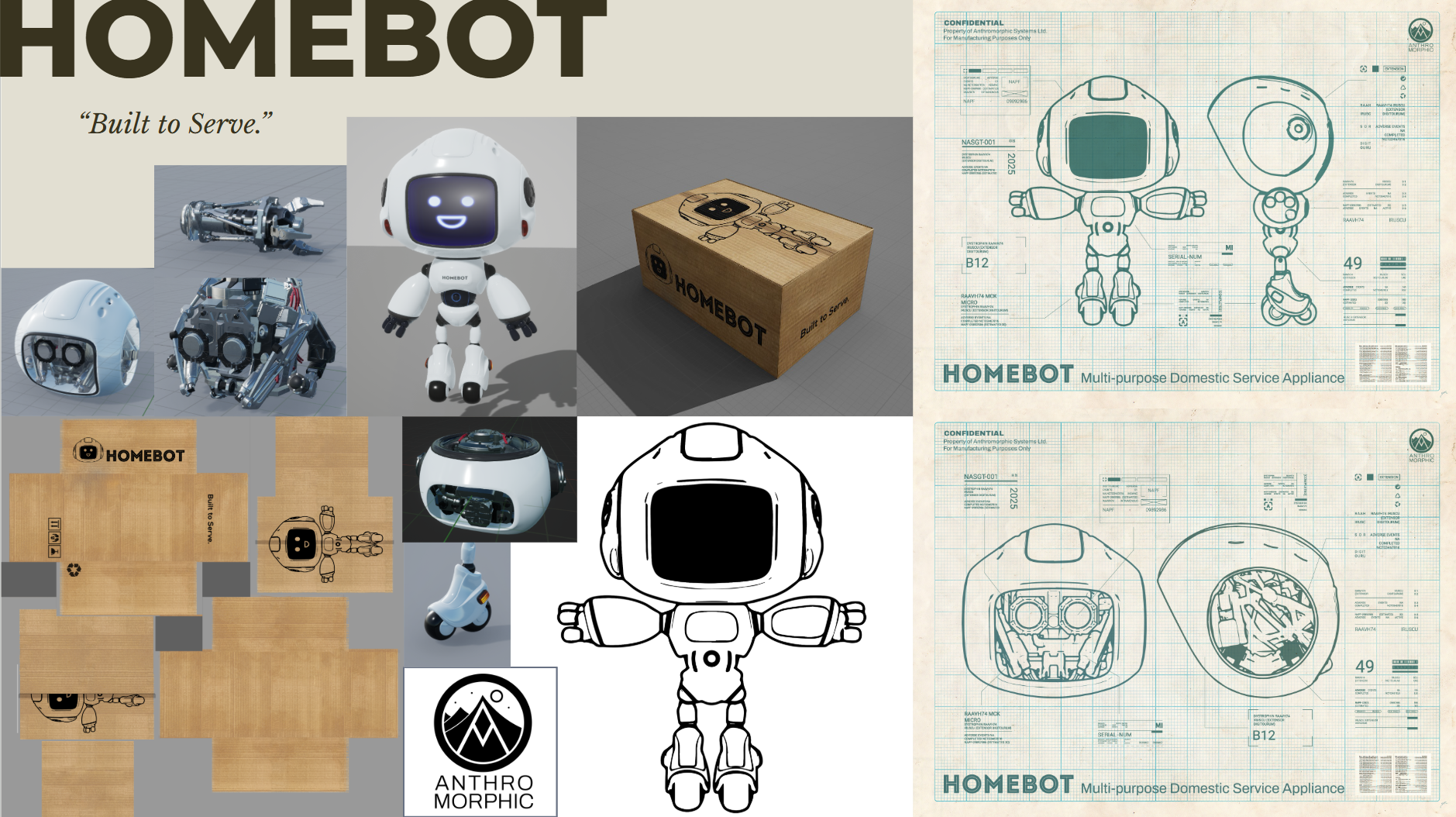
The Homebots are the product being manufactured in the factory. That meant designing more than just the robot itself: packaging and branding, blueprints, diagnostic screens, and all the other details that make it feel like an actual mass-produced product. The original model was also hollow, so I added a lot of mechanical “guts” to fill out the interiors for the assembly sequences.
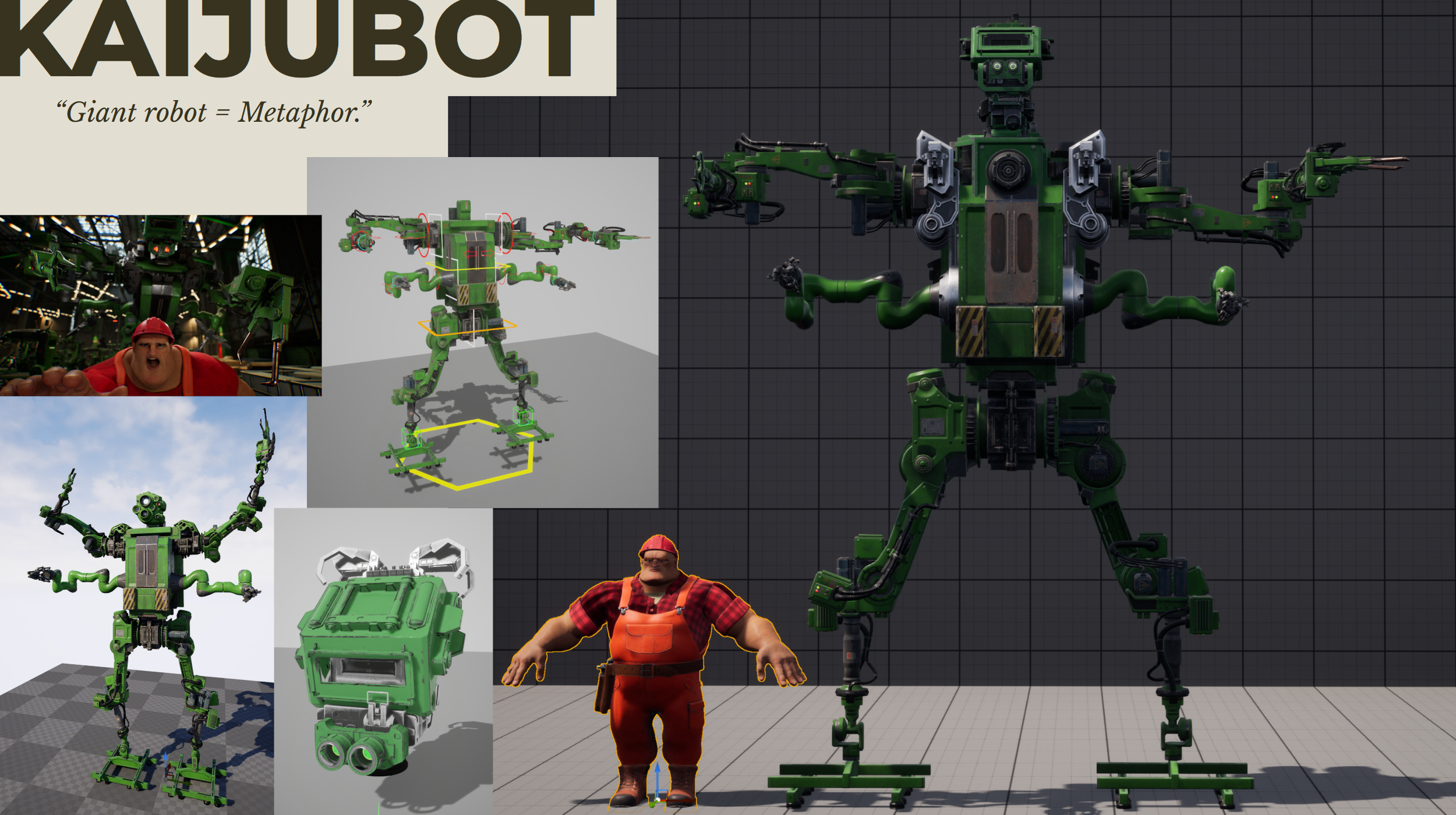
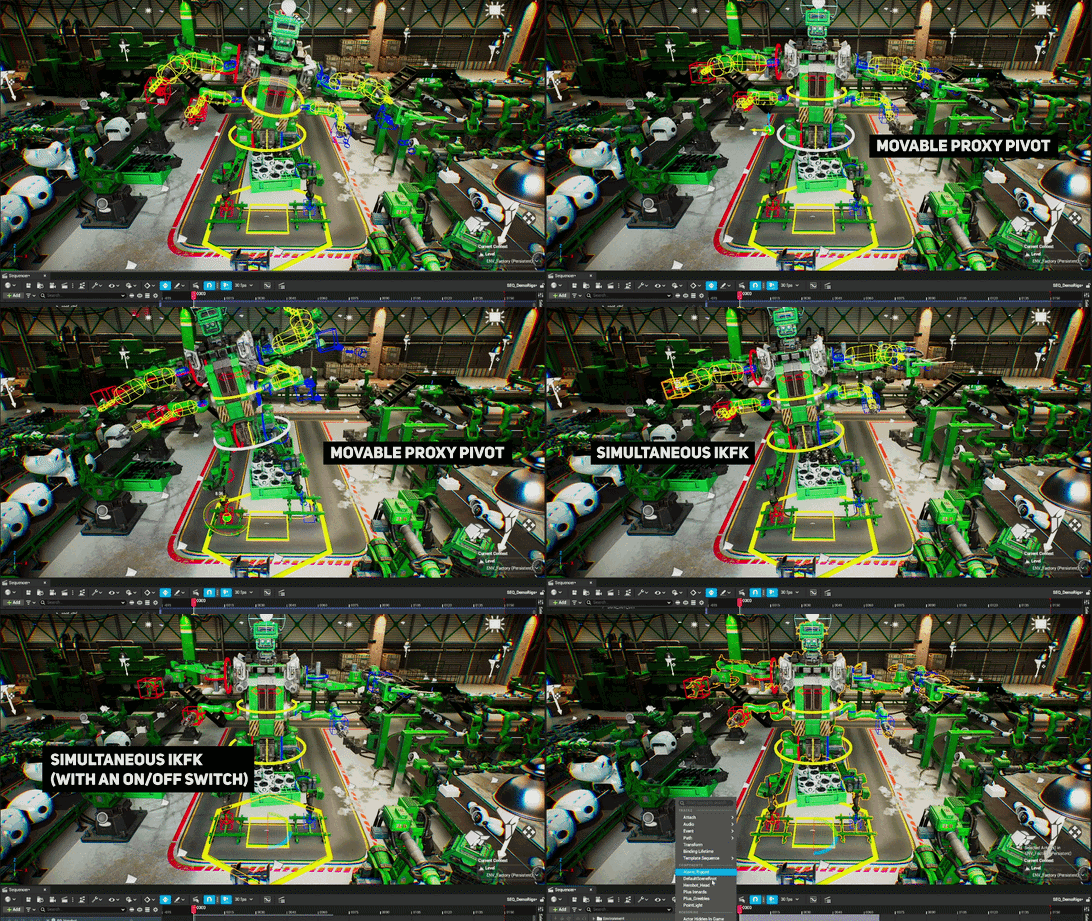
Finally, the Kaijubot is a Voltron-like combination of six of the industrial robots we see throughout the factory. Figuring out how six separate machines could assemble into one giant robot was a crazy design and rigging challenge. In a stroke of luck, Epic Games invited me to join their Rigging Workshop right around the time I was really struggling with it, so I got to rig it from scratch with their expert guidance.
It ended up being really fun to animate.
Machines Learning was a massive learning experience for me.
Eight minutes and 112 shots was, I now understand, a pretty ambitious scale for my first original animated short.
Doing every part of the pipeline myself was frustrating, exhausting, and occasionally ridiculous - but I learned an enormous amount because of it. There’s nothing quite like having to solve every problem yourself to figure out which problems you never want to solve again.
It’s been wonderful to see the response the film has had on the festival circuit, and I’m incredibly grateful that people seem to connect with it.
But more than anything, I’m excited to take everything I learned making Machines Learning and put it into the many exciting new projects in my pipeline.